Universal Pantheist Society
  • Home
  • What is Pantheism?
  • Key Ideas
    • The Pantheist World View
    • God and Belief - The Pantheist Alternative
    • Against Speculation
    • The Emotions of Pantheism
    • Pantheism and Panentheism
    • Earthkeeping
    • Rejecting Anthropocentrism
    • What is Divine Presence?
  • Pantheist Vision Journal
  • Publications
    • The Practice of Pantheist Mindfulness
    • Devotion to Truth
    • Chronological Syllabus
    • God, Humanity, and Pantheism
    • Anthopocentrism by John Seed
    • Inner Source of Pantheism
    • More Publications
  • About Us
    • Our Entry in Encyclopedia of Religion and Nature
    • Our Twenty-Fifth Anniversary (2001)
  • Join Us!
    • Membership Application Form
    • Member Renewal
    • Suggestions / Comments
  • Blog
  • On-Line Communities
    • Follow us on Facebook
    • Universal Pantheists Discussion Group
  • Reading List
  • Contact Us

International Hyena Day

4/27/2023

Comments

 
Picture
Photo:  The 4 species of Hyena  (Creative Commons license - Wikipedia)

Today is International Hyena Day as well as being International Tapir Day

Hyenas are carnivorous mammals that are found throughout Africa, the Middle East and parts of Asia.

There are 4 species of Hyena, the Brown (found only in Africa), the Striped (Africa, much of the Middle East and parts of Asia), Spotted (Native to Sub-Saharan Africa) and the Aardwolf Hyena (Africa).

Although Hyenas are related more to felines than they are to Canines their behaviour more closely resembles Canines. 

Hyena evolution can be traced back to around 22 million years ago and although all related the 4 species are quite distinctive from each other. 

Although most famous for being scavengers Hyenas are very capable hunters and get 50-90% of their diet from hunting depending on the species of Hyena.

Hyenas have a rich history associated with human too which are explained and explored in the links below.

​www.awf.org/wildlife-conservation/hyena

​talkinghumanities.blogs.sas.ac.uk/2021/03/16/hyenas-and-humans-millennia-of-myths-misrepresentations-and-persecution/

www.youtube.com/watch?v=PqYIMgpqo1M

KIDS CORNER
www.natgeokids.com/uk/discover/animals/general-animals/spotted-hyena-facts/
​
www.youtube.com/watch?v=VBVetU8FsRE


By Brendon Crook
Comments

Bat Appreciation Day

4/17/2023

Comments

 
Picture
Photo: Fruit Bats from various countries (Megabats) -- Photo: License under common use license. 

Today is Bat  appreciation day.

In some circles Bats are anything but appreciated and have for long had a bad image which is very unfair as they are an integral being in our eco-systems and are found almost everywhere on the planet except very cold regions. 

Bats are the only true and sustained flying mammal and have a fossil record going back nearly 50 million years. They feed on fruit and insects and some such as the Hairy-legged Bat and White Winged Bat that feed only on the blood of birds or large mammals. 

Bats are very vocal creatures and the Mexican Free Tailed Bat is one of a few that actually sing like a bird. They also have amazing sonar detection devices that have been known to be able to be jammed by certain species of Moths.

I'm sure people reading this will love Bats for the unusual but wonderful creatures they are but if you come across people who hold a negative opinion of them please put them right and explain to them just how beneficial Bats really are to our world. 

For more information on these fluffy fliers feel free to click on the links below. Especially interesting to me are the articles on their radar systems. 

​www.si.edu/spotlight/bats/batfacts

animals.sandiegozoo.org/animals/bat

​www.youtube.com/watch?v=qJOloliWvB8

https://www.merlintuttle.org/

https://www.batcon.org/


KIDS CORNER
www.natgeokids.com/uk/discover/animals/general-animals/bat-facts/
​
www.youtube.com/watch?v=9FVoTMOorXA

By Brendon Crook.
Comments

The Woodlouse, a Crustacean of many names.

3/25/2023

Comments

 
Picture
Photo: Brendon Crook         (Borderlands Southern Texas)

​A Woodlouse is a Crustacean that gets their name from being found in old wood. They have many names the world over and you may know the creature in the photo by an entirely different name as I do. In fact I've only ever known them as Slaters from where I'm from and while I've heard of Woodlice I never knew this was one before reading about them for this article!!!

Woodlice fossils date back to around 100000 years ago and have endured many changes to the earth in that time. 
Some species live in arid deserts while others have returned to aquatic environments. 

They eat fungi and rotting plants. They will also eat seedlings and soft fruits although they are considered beneficial in the garden as they turn and aerate the soil and they add compost.

The female Woodlouse will keep fertilized eggs in what is called a marsupium on the underside of her body. A female Woodlouse is also capable of reproducing asexually.

Although they do turn up in human houses they are usually there as they like damp places so you likely have a dampness problem which is Natures way of letting you know so you can repair it. 

Please don't kill or harm them.

​Below are some ideas on removing them from areas you don't wish them to be.
By the way a group of Woodlice are called a Quabble. 

Rather than see them as a pest we should embrace them and see them as fellow Earthlings and amazing little creatures in so very many ways. 

​The text underlined below is from a UK company that has many non-lethal ways to remove unwanted insects/rodents and keep them out. 
The link to them is www.fantasticpestcontrol.co.uk/blog/humane-methods-for-handling-common-household-pests/#
​


"Since woodlice play an essential role in decomposition, it’s better to remove them from your home rather than kill them. They usually live in damp places, such as piles of leaves, woodpiles, and under rocks, and may occasionally be found indoors. 
A woodlice infestation can be the first sign of a damp problem in your home, which is why finding the source and fixing it is crucial. If you see no other evidence of dampness, you should close up any holes, clean your gutters, and remove any rotting plant material from outside your home. Cinnamon, peppermint, citrus, and oregano essential oils are particularly effective in preventing woodlice infestations".


www.countrylife.co.uk/nature/bizarre-world-of-woodlice-164708

​KIDS CORNER

www.biokids.umich.edu/critters/Armadillidium_vulgare/

factanimal.com/woodlouse/

www.youtube.com/watch?v=QVkZwv1T3kE


By Brendon Crook
Comments

World Sparrow Day

3/20/2023

Comments

 
Picture
Photo: Male House Sparrow    (Rhododendrites - Wikipedia Creative commons license)

Today is world Sparrow day.

I guess Sparrows need little introduction however there are some interesting facts about them especially as we lump them all into one species as these sweet little birds seem to be never far away.

Old World Sparrows are considered true Sparrows and are a distinct species from the New World Sparrows which are more closely associated with Buntings.  
The House sparrow and the Eurasian Tree Sparrow are probably the most familiar to us. 

Sparrows mostly eat seeds and small insects although they are opportunistic in cities or where ever humans have been and will eat what has been dropped or discarded us.

Sparrows have a rather sparse fossil record up until 10000-20000 years ago. Once agriculture began to spread Sparrows moved with it and evolved to the climate they found themselves in. 

Below are some interesting links to the Sparrow. 

​​www.audubon.org/field-guide/bird/house-sparrow
​

www.thespruce.com/pictures-of-sparrows-4121969

www.youtube.com/watch?v=Eh1_u9wJPyQ

KIDS CORNER

​
www.biokids.umich.edu/critters/Spizella_arborea/

By Brendon Crook


Comments

Buzzard Day

3/15/2023

Comments

 
Picture
Photo: Charles J Sharp - Etosha National Park, Namibia (Creative Commons license)

Today is Buzzard Day.

Buzzards are large birds of which there are 26 species. The term Buzzard is often applied to many birds who aren't in fact true Buzzards. 
​
​Buzzards are a type of medium to large Hawk of which there are 26 species. 

True Buzzards can be distinguished by their large tails, broad wings and their slow heavy wing beats in flight.

The Common Buzzard ranges all over Europe and up into Scandinavia. Other Buzzards are found in Eurasia, northern Africa and North America. 

Vultures are often called Buzzards even though they are not the same bird. Buzzards are more likely to hunt live prey then eat carrion although they will eat already dead animals. 

For more interesting facts on Buzzards and their differences to other birds often called Buzzards there are some links below.

​www.thespruce.com/buzzards-vs-vultures-4171318

www.youtube.com/watch?v=cw-IGYyae6c


By Brendon Crook

​

Comments

World Hippopotamus Day

2/15/2023

Comments

 
Picture
Photo: Common Hippopotamus in Saadani National Park (Muhammad Mahdi Karim - Wikipedia creative commons license)


Today is World Hippopotamus Day.

There are 2 living species of Hippopotamus both of which live in Sub-Saharan Africa. One is the Nile or Common Hippopotamus and the other is the pygmy hippopotamus.

Hippos live in many different water ways, everything from rivers to mangrove swamps and estuaries and are semi-aquatic usually cooling in the water by day and grazing on land during the night. They have webbed toes which help them in the water and also help them grip on steep or slippery banks when on land.
They are herbivores and eat mostly grasses and very little aquatic vegetation.

Hippopotamus live between 40 - 50 years of age and can weigh up to 3300Ib (1500kg) for the male (Bull) and 2900Ib (1300kg) for the female (Cow).

There estimated to be between 115000 - 130000 hippos left in the wild but they are under threat from loss of access to fresh water and are also subject to unregulated hunting and poaching..

The Pygmy Hippopotamus lives only in the forests and swamps of West Africa and are critically endangered. They are solitary and nocturnal creatures and only around 2500 remain in the wild. They are threatened by habitat loss and poaching and hunting.

If you would like more information on these captivating creatures I've included some links below:

​www.awf.org/wildlife-conservation/hippopotamus

www.youtube.com/watch?v=67xmpRHj9wA

​
​
KIDS CORNER
www.natgeokids.com/uk/discover/animals/general-animals/ten-hippo-facts/

www.youtube.com/watch?v=0iYx5q5CudI
​


By Brendon Crook

Comments

World Bonobo Day

2/14/2023

Comments

 
Picture
Photo of Bonobos at San Diego Zoo  (WH Calvin - Wikipedia creative commons license)


Today is World Bonobo Day.

Bonobos are similar to Chimpanzees and are sometimes called the pygmy Chimpanzee. 

They are found only in the forests of the Democratic Republic of the Congo in Central Africa and are estimated to number around 30-50000 individuals which can live up to 40 years old. 

The Bonobo is on the endangered list due to habitat destruction and human population growth. They are also in decline through poaching. 

Bonobos live in a matriarchal social structure and don't have defined territories. 
They eat fruit, leaves, eggs, and meat in the form of small invertebrates. 

There is still a lot unknown about them as they are only found in the DRG which has seen much internal conflict over the years and much study comes from zoos.

The most active conservation organization working to protect Bonobos today is the Bonobo Conservation Initiative:
https://www.bonobo.org/

If you wish to learn more of these fascinating cousins of ours I've included some links below.


www.awf.org/wildlife-conservation/bonobo

www.youtube.com/watch?v=sN-Hj73ES2U

​KIDS CORNER

kids.kiddle.co/Bonobo
​

By Brendon Crook
​

Comments

International Zebra Day

1/31/2023

Comments

 
Picture
Photo: Plains zebra   (Wikipedia common license) 

Today is International Zebra Day which is to bring awareness and raise conservation efforts on the zebra and its vanishing habitats. 

The Zebra shares its genus with horses and asses.

There are 3 species of zebra alive today and they are the plains zebra, the Grevy's zebra and the mountain zebra. The plains zebra is the most common and perhaps the most well known.

All zebras alive today are found only in the southern half of the African continent.

Zebra stripes are unique to each zebra with no two being the same, rather like human fingerprints. No one can really say why they have stripes, some say for camouflage from lions others think it's to repel biting horse flies but no one knows for sure. 

A newly born foal can stand within six minutes of being born and can run within an hour of being born.

See below for more information on these amazing animals of the plains and mountains of Africa.

www.awf.org/wildlife-conservation/zebra


KIDS CORNER

www.youtube.com/watch?v=kWxnadQI5Qw


By Brendon Crook.
Comments

Peccaries

1/26/2023

Comments

 
Picture
Photo by Brendon Crook. Bentson State Park, Mission TX


Peccaries, also know as Javelina are a pig like animal found throughout the Caribbean, Central America, large areas of South America and the south western parts of North America. 

Peccaries are distant relatives of the pig but are not of the same family and have very distinct differences. Even so they are referred to as New World pigs.

​There are 3 species of Peccary. The white-lipped peccary, the Chacoan peccary and the collared peccary. 

Peccaries mostly eat cactus, roots and seeds but will eat grubs and insects if they are available. They have adapted to being around humans and can be found in cities and agricultural areas. Living mostly in groups of 6-9 individuals a group of peccaries is called a Squadron. 

An interesting little animal that seem quite at peace with their surroundings.

If you would like to know more about peccaries I have included some links below:


​www.southwestwildlife.org/resident-animals/javelina/javelina.html

​rainforests.mongabay.com/kids/animal-profiles/peccaries_extended.html
​

www.youtube.com/watch?v=HodNVdJDntg

​
KID'S CORNER
​

www.youtube.com/watch?v=tS2uhBzigz0
​​
kids.kiddle.co/Peccary


By Brendon Crook
Comments

Lichen

1/7/2023

Comments

 
Picture
Photo: Lichen on trees, Bentson State Park, Mission, TX.


Something that people see a lot of but perhaps don't give it much thought is lichen. 
Lichen is a composition of fungi and algae. They are not considered plants even though many resemble them with leaves and even branches. 

Lichen can grow on almost any surface and at nearly any elevation from sea level to mountain alpine regions and can even grow on other lichen. 

There are around 20000 known species that cover 6-8% of the Earth's land area.

Lichens are very long lived with an Arctic species dated at 8600 years old. 
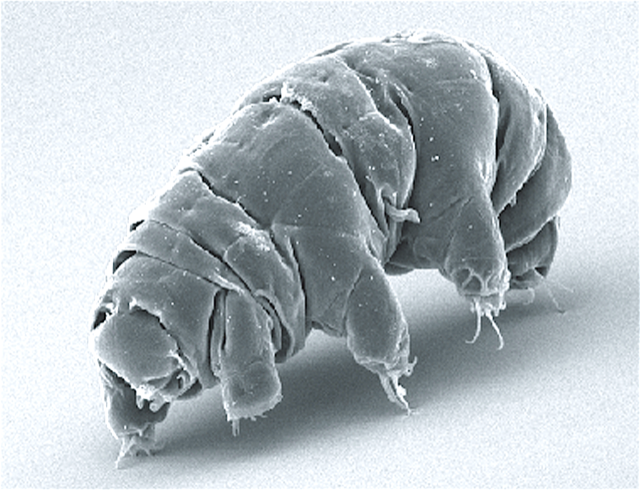
Like the Tardigrades covered in a previous blog here they can also live in extreme conditions of heat and cold and have even been subjected to conditions in space with no ill effects. 

Although able to cope with such extreme conditions some lichen are sensitive to pollution as they have no roots and no way to filter what they absorb so if there are pollutants in the air it can accumulate in the lichen which can become toxic although not all lichen are sensitive to air pollution.

More information on lichen can be found on the links below. 

www.fs.usda.gov/wildflowers/beauty/lichens/about.shtml

www.youtube.com/watch?v=XQ_ZY57MY64

​

​
By Brendon Crook

Comments
<<Previous
Forward>>

    Blog

    Our blog provides insights and news for Pantheists. ​

    Archives

    September 2025
    August 2025
    February 2025
    January 2025
    December 2024
    November 2024
    October 2024
    September 2024
    March 2024
    January 2024
    December 2023
    November 2023
    October 2023
    September 2023
    August 2023
    July 2023
    June 2023
    May 2023
    April 2023
    March 2023
    February 2023
    January 2023
    December 2022
    November 2022
    October 2022
    September 2022
    August 2022
    February 2022
    September 2021
    May 2021
    April 2021
    March 2021
    February 2021
    January 2021
    December 2020
    November 2020
    October 2020
    September 2020
    August 2020
    July 2020
    June 2020
    May 2020
    April 2020
    March 2020
    February 2020
    January 2020
    December 2019
    November 2019
    September 2019
    August 2019
    July 2019
    June 2019

    Categories

    All
    Animals
    Art
    Autumn
    Birds
    Books
    Jane Goodall
    Nature
    Pantheist Holidays
    Pantheist Quotes
    Pantheist Vision
    Peace
    Photography
    Poetry
    Science
    Sky Watch
    Spring
    Thanksgiving
    UPS
    Wetlands
    Wildlife
    Winter

    RSS Feed

"We seek a renewed reverence for the Earth and a vision of Nature as the ultimate context for human existence..."

©  Copyright 1998-2025 Universal Pantheist Society


About Us |  Contact Us   |  Join